
Between 2026 and 2030, the pharma sector is set to face what analysts are calling a "super-cliff": a wave of patent expirations that will expose approximately $236 billion of annual revenue to competition from generics and biosimilars [1]. This isn't merely another cyclical downturn. Instead, it represents a fundamental restructuring of the pharmaceutical landscape that demands innovation and adaptive thinking from industry leaders.
The Patent Cliff: Survival Strategies for Pharma Leaders
Get involved
Book your stand
Exhibitors
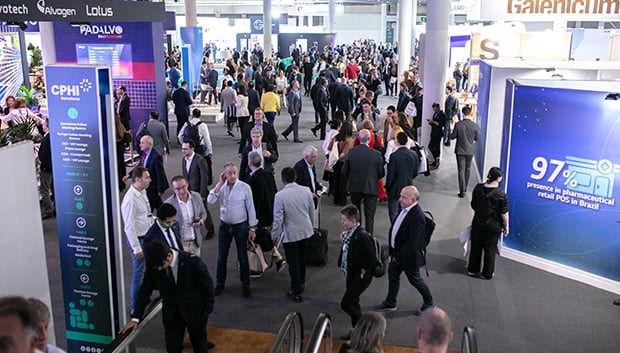
Lean on 35+ years of CPHI expertise; we know how to connect pharma companies to strike deals, forge partnerships and make amazing memories at our world-class event. Come for the excellent business opportunities and stay for the immersive CPHI experience.

Explore the pass options
Attendees
If you are already serving these needs or looking for your next long-lasting partnership, you need to join us at CPHI Milan 2026. Connect with a global audience and deliver high quality products to the very best client base working in pharma today
Understanding the Current Pharmaceutical Patent Cliff
Unlike previous patent expiration cycles, this 2026 patent super-cliff encompasses an extraordinary concentration of blockbuster medications simultaneously losing their exclusivity. High-revenue drugs including Merck's Januvia and Janumet (diabetes), Pfizer's Xeljanz (immunology), Novo Nordisk's Ozempic (GLP-1 therapy), and Johnson & Johnson's Stelara (biologics) are amongst the most prominent casualties [2]. Some projections suggest that when factoring in the impacts of the US Inflation Reduction Act (IRA), total revenue at risk could reach $400 billion by 2033. [2]
This convergence of expiring patents spans multiple therapeutic areas, creating a perfect storm that could fundamentally reshape the competitive dynamics of the sector. For companies facing significant exposure, more than 30% of collective revenues from major players like Bristol Myers Squibb, Pfizer, and Regeneron are at immediate risk.[3]
Evergreening and the Tightrope of Innovation
Incrementally modifying of existing drugs to extend patent protection has been a long-standing cornerstone of drug patent expiration strategies, and has come to be known as “evergreening”. However, this approach has faced mounting scrutiny from regulators, payers and public health advocates. Research reveals that 78% of drugs associated with new patents between 2005 and 2015 were not novel treatments, but existing ones with minor modifications. [4]
Pharmaceutical companies employ various evergreening tactics, including securing patents for new formulations, alternative delivery mechanisms, different salt forms, polymorphs and additional therapeutic indications. While these strategies can legitimately extend product lifecycles and provide genuine clinical benefits, they must be balanced against increasing regulatory scepticism and the risk of reputational damage.
The challenge for pharma leaders lies in how to manage patent expiration pressures whilst maintaining innovation credibility. Secondary patents, which cover manufacturing processes, dosing regimens and methods of use, can create formidable barriers to generic entry, but they also invite antitrust scrutiny and patent challenges that can prove costly and time-consuming .[5]
Extending Exclusivity Windows to Prevent Evergreening
The Biologics Price Competition and Innovation Act (BPCIA) grants biological products 12 years of regulatory exclusivity, a substantially longer period than the five years typically afforded to small-molecule pharmaceuticals. [6] This extended protection period was designed to account for higher development costs, longer timelines and the inherent manufacturing complexity that comes with the development of biologics.
However, this predictable 12-year window has created both opportunities and challenges. On one hand, it provides innovators with the security needed to invest in high-risk research and development. On the other, it has inadvertently enabled sophisticated patent lifecycle management strategies, allowing companies to systematically file waves of secondary patents over the course of a decade. [7]
Critically, the BPCIA includes anti-evergreening provisions: the 12-year exclusivity clock is triggered only by the first licensure of a novel biologic and does not reset for subsequent approvals of new indications, different dosing schedules, or minor formulations [7]. This forces innovators to rely on robust patent portfolios rather than solely counting on regulatory extensions, underscoring the importance of strategic intellectual property planning from day one.
Save 50%
Standard Pass
Access the show floor, exhibitor list, content sessions and lead scanning.
€329
Save 50%
Explorer Pass
Everything in Standard with early access to the venue, plus Match & Meet Lounge access and a free public transport pass.
€499
Biggest discount ever
Leader Pass
Everything in Explorer with earlier access to the venue, plus fast-track entry, Leader Lounge access, a welcome gift and the Leaders Summit.
€799
Ultimate access
Networking Leader Pass
Everything in Leader, plus concierge service, facilitated networking, exclusive access to reserve premium hotels next to the venue, venue transport and dedicated networking spaces.
€3,999
Note: All prices are exclusive of tax.
Navigating the New Competitive Landscape of Biosimilar Competition Strategies
Unlike generic drugs, which typically capture 80% market share, biosimilars face unique barriers to adoption as the market matures. Requiring 8-10 years and $100-250 million in investment, they're more complex and expensive to develop, requiring additional FDA evidence for interchangeability designation,. Furthermore, they are predominantly administered in medical settings, where prescribers maintain greater control over product selection. [8]
Despite these challenges, biosimilars are delivering substantial savings. By 2020, biosimilar savings had increased over 800% from 2018 levels, reaching $7.9 billion, with prices averaging more than 50% below brand prices at launch. [9] Projections suggest biosimilars will deliver over $130 billion in savings to the US healthcare system by 2025 alone.
However, the competitive landscape is complicated by vertical integration. Pharmacy benefit managers (PBMs) increasingly manufacture or license their own "private label" biosimilars, creating potential conflicts of interest that may stifle independent competition. For pharma companies, this means that market access is increasingly a function of PBM relationships and rebate strategies rather than product quality or price alone.
Thinking Beyond Traditional Lifecycle Management
To navigate the perils of the patent cliff, smart pharmaceutical leaders are adopting multifaceted approaches:
Portfolio Diversification: Companies are investing in next-generation therapies including cell and gene therapies, mRNA platforms and bispecific antibodies that offer novel mechanisms of action and robust intellectual property positions.
Strategic Partnerships: Collaboration with contract development and manufacturing organisations (CDMOs) enables faster development timelines, risk sharing, and access to specialised capabilities without massive capital investment.
Geographic Expansion: Emerging markets offer growth opportunities where patent landscapes differ and healthcare infrastructure is rapidly expanding.
Authorised Generics: Some innovators are launching their own generic versions to capture a portion of the post-exclusivity market whilst managing the transition.
505(b)(2) Pathway: This regulatory route allows companies to develop improved formulations such as extended-release versions or combination products, supported by incremental innovation and new intellectual property, effectively bridging the gap between brand exclusivity and generic competition.
Forging Partnerships for Next-Generation Therapies
In this challenging environment, strategic partnerships have become essential for survival and growth. CPHI Milan, the world's largest pharmaceutical supply chain event, offers unparalleled opportunities for pharma leaders to connect with the bioproduction ecosystem. The event's dedicated Bioproduction zone brings together over 62,000 pharmaceutical professionals and 2,500 exhibitors, including industry leaders like Lonza, Samsung Biologics, Thermo Fisher, and Pfizer CentreOne.
The Bioproduction zone specifically addresses the needs of companies developing next-generation biologics, with content covering AI integration, digital transformation and advancements in cell, gene, and mRNA therapies. For pharmaceutical companies facing patent cliffs, these partnerships can accelerate development timelines, reduce capital requirements and provide access to cutting-edge manufacturing capabilities essential for bringing innovative therapies to market.
With over 150 expert speakers delivering 130+ sessions on regulatory trends, technological innovations and sustainable practices, CPHI Milan provides both the knowledge and networking infrastructure necessary to navigate the patent cliff successfully. The partnerships forged at events like CPHI Milan will prove instrumental in determining which companies thrive in the post-patent cliff landscape and which struggle to maintain relevance.
The pharmaceutical patent cliff of 2026 is a call for transformation. Success will require leaders to balance legitimate lifecycle management strategies with genuine innovation. Companies that view the patent cliff as little more than a threat will likely struggle. Those that recognise it as an opportunity to reimagine their business models, invest in truly innovative therapies and build partnerships across the bioproduction ecosystem will emerge stronger for their efforts.